Beyond Vibe Coding: Context Is the Real Competitive Advantage
AI can generate code quickly, but context determines whether that code solves the right problem and survives the real world.

Vibe coding has dramatically reduced the distance between an idea and working software. But while AI can generate code in seconds, it cannot automatically understand the organisation, users and consequences surrounding that code. Context is what separates a compelling demonstration from a dependable product.
Speed has changed—but the responsibility has not
AI coding assistants are excellent at translating clear instructions into components, interfaces and workflows. They help experienced developers explore alternatives and allow non-technical teams to make an idea tangible. This is a meaningful productivity shift.
However, generated code can look complete before the thinking behind it is complete. A system may function in a controlled test while ignoring privacy obligations, permissions, unreliable connectivity, integration constraints or the way work actually happens. The faster the code appears, the easier it is to confuse visible progress with solved problems.
AI accelerates the answer. Context determines whether the right question was asked.
What useful context actually includes
A good prompt describes a feature. A good product context explains why that feature should exist and the environment in which it must succeed. Teams should give AI—and themselves—a shared view of the business objective, user journey, data model, operating constraints and acceptable risk.
Business context
The decision or outcome the system must improve, including how value will be measured.
User context
The people, workflows, accessibility needs and real conditions surrounding use.
Technical context
Architecture, integrations, performance expectations and maintainability standards.
Risk context
Privacy, security, regulation and the consequences of an incorrect result.
A disciplined approach to vibe coding
Begin with a bounded problem and a clear definition of success. Provide examples of real inputs and expected outputs. Ask the AI to state assumptions before generating a solution, then review those assumptions with subject experts and users.
Prototype quickly, but introduce engineering discipline as soon as the idea shows promise. Test edge cases, document architectural decisions, review dependencies and add automated checks. Generated code should enter the same quality process as human-written code. Human accountability remains essential, especially where systems handle money, health information, research participants or consequential decisions.
Finally, preserve the context that produced the system. Requirements, prompts, decisions and user feedback should become part of the product record. Without that continuity, each new AI-assisted iteration begins with partial understanding and can quietly undo earlier decisions.
Context is the multiplier
Vibe coding is most valuable when it accelerates a well-understood problem. Invest in clear objectives, real user evidence, explicit constraints and accountable review. The advantage is not merely generating more code—it is turning organisational knowledge into better software, faster.
Related perspectives
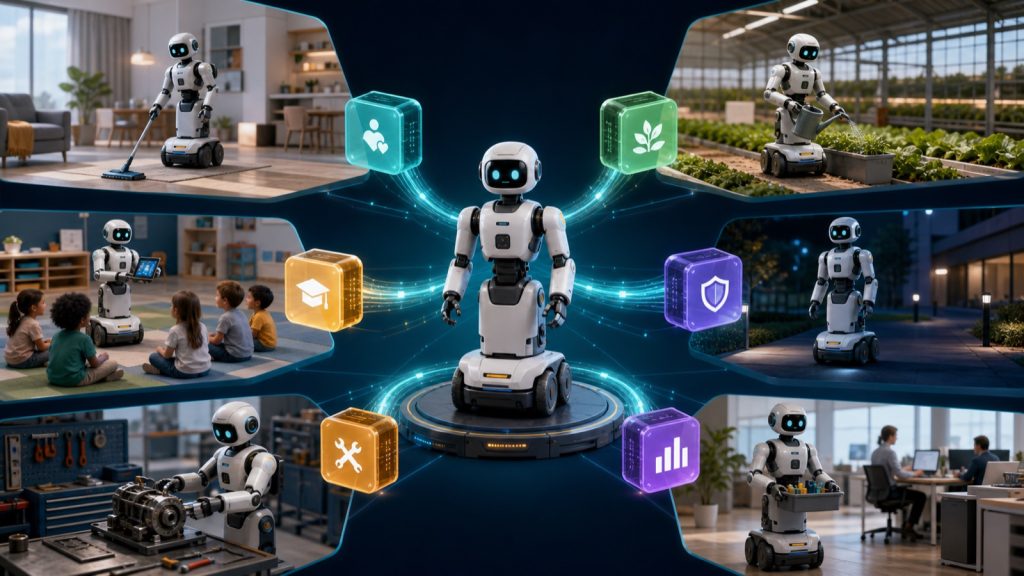
One Robot, Many Professions: The Future of Installable AI Skills
What if affordable robots worked like computers—standard hardware transformed by installable AI skills for care, farming, teaching, security and maintenance?
Read article
When Money Loses Meaning: What an AI-Abundant Economy Would Really Require
Elon Musk predicts AI and robotics could make money irrelevant by 2036. But abundance is not only a production problem—it is an access and…
Read article
Your Data Is Worth More Than You Think
The information already inside your organisation may reveal opportunities, risks and customer needs that remain hidden in everyday operations.
Read article