When Money Loses Meaning: What an AI-Abundant Economy Would Really Require
Elon Musk predicts AI and robotics could make money irrelevant by 2036. But abundance is not only a production problem—it is an access and governance challenge.
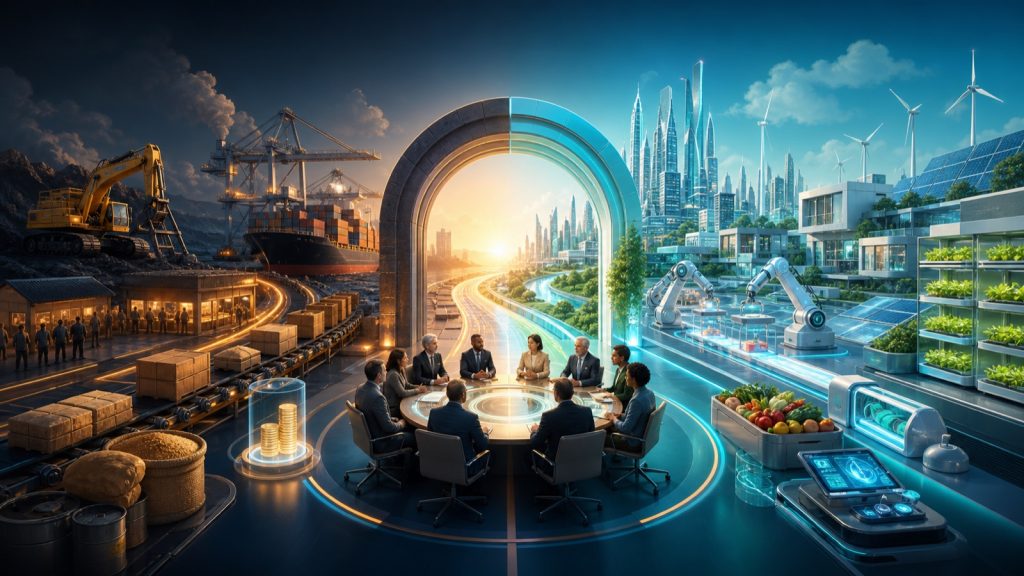
In a recent interview with The Economist, Elon Musk predicted that AI and robotics could create such extraordinary abundance that money would no longer matter by 2036. It is a provocative claim—but the most important question is not whether money disappears. It is whether technology can remove scarcity, and whether abundance would be accessible to everyone.
What Musk actually said
Asked to describe the world ten years from now, Musk argued that digital intelligence combined with large-scale robotics could create what he called a “quasi infinite economy”. His reasoning is straightforward: money helps allocate scarce labour, goods and services. If intelligent machines can produce more than humans can consume, that coordinating role becomes less important.
He reduced the prediction to a striking line: “Money won’t matter in 2036.” He then pointed to food, housing, transport and entertainment as examples of things people currently need money to obtain. If those became abundant, he asked, what would money still be for?
The remarks came during The Economist’s July 23, 2026 interview. They also extend an argument Musk made in a 2025 People by WTF conversation, where he suggested that work could become optional within 10–20 years as AI and robotics satisfy more human needs.
The claim is best understood as a conditional future, not a financial forecast: if production becomes effectively unlimited, money’s role could shrink.
Money is a response to scarcity
Money is more than notes, coins or balances in an account. It is a coordination system. It helps societies compare value, exchange labour, allocate limited resources and plan for future needs. Its relevance persists because land, energy, skills, time and productive capacity remain constrained.
AI can reduce some forms of scarcity. Software can make expertise cheaper to access. Automation can lower the cost of production. Robotics may expand capacity in agriculture, logistics, construction and care. As marginal costs fall, services that were once expensive can become widely available.
We have already seen a partial version of this in digital goods. One additional person can use software, view educational content or access an AI service at a much lower cost than producing another physical product. But even digital abundance depends on scarce inputs: computing infrastructure, electricity, specialist hardware, networks and the capital required to build them.
What would remain scarce?
Land and location
Automation cannot make every person own the same desirable piece of land or live in the same neighbourhood.
Energy and materials
Robots still require power, minerals, supply chains and physical maintenance.
Attention and trust
Human attention, authentic relationships, reputation and institutional confidence remain limited.
Access and ownership
Abundant output matters little if productive systems are controlled by a narrow group.
This distinction is critical. Production and distribution are different problems. A society may possess the technical capacity to create enough food, healthcare or education while people still lack access because of infrastructure, policy, geography or unequal bargaining power.
The transition may matter more than the destination
Even if Musk’s long-term vision proves directionally correct, economies do not move from scarcity to abundance overnight. During the transition, some tasks will be automated before new systems of income, ownership and social protection are ready. Productivity gains may accumulate faster than they are shared.
This creates immediate questions for leaders. Who owns the AI and robotic infrastructure? How are productivity gains reflected in wages, prices, public services or broader participation? How do people retain agency when work is no longer the main route to income and identity? And how should taxation change when value is created by machines operating across borders?
The debate therefore extends beyond universal basic—or “high”—income. It includes ownership models, access to digital infrastructure, competition, education, portable benefits and the public systems needed to manage a different relationship between labour and value.
What this means for organisations today
Businesses do not need to believe money will disappear to prepare for cheaper intelligence and increasing automation. They should identify where scarcity currently limits value: scarce expertise, slow decisions, repetitive processes, inaccessible services or expensive customisation. These are areas where AI can create meaningful near-term abundance.
However, implementation should be measured by more than cost reduction. Leaders should ask whether automation improves access, quality and resilience; whether workers can move towards higher-value responsibilities; and whether customers share in productivity gains through better or more affordable services.
Organisations should also invest in the foundations that an automated economy requires: trusted data, interoperable systems, cybersecurity, responsible AI governance and clear human accountability. Abundance built on unreliable information or concentrated control will not feel abundant to the people it is meant to serve.
The future of money is really a question about access
Musk’s prediction is valuable because it challenges us to imagine what happens when intelligence and production become dramatically cheaper. But technology alone cannot guarantee shared abundance. The decisive work will be designing the ownership, governance and digital delivery systems that turn productive capacity into real human access.
Source note: This perspective responds to Elon Musk’s interview with The Economist, published July 23, 2026, and his earlier comments about optional work and declining monetary relevance. The prediction remains speculative and conditional on sustained advances in AI and robotics.
Related perspectives
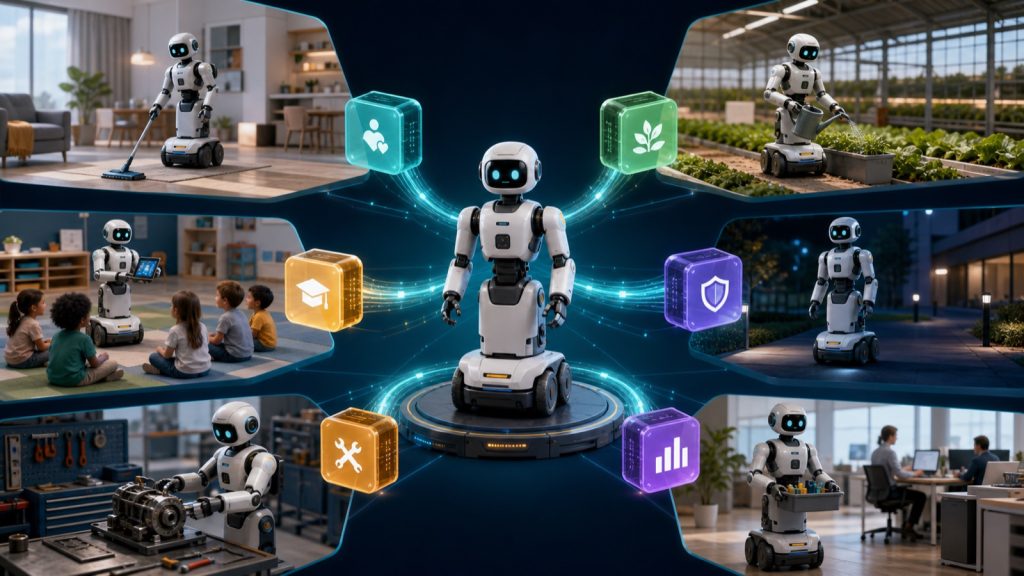
One Robot, Many Professions: The Future of Installable AI Skills
What if affordable robots worked like computers—standard hardware transformed by installable AI skills for care, farming, teaching, security and maintenance?
Read article
Beyond Vibe Coding: Context Is the Real Competitive Advantage
AI can generate code quickly, but context determines whether that code solves the right problem and survives the real world.
Read article
Your Data Is Worth More Than You Think
The information already inside your organisation may reveal opportunities, risks and customer needs that remain hidden in everyday operations.
Read article